
My journey into counseling began not with certainty, but with lived experience—of growth, survival, healing, and transformation.
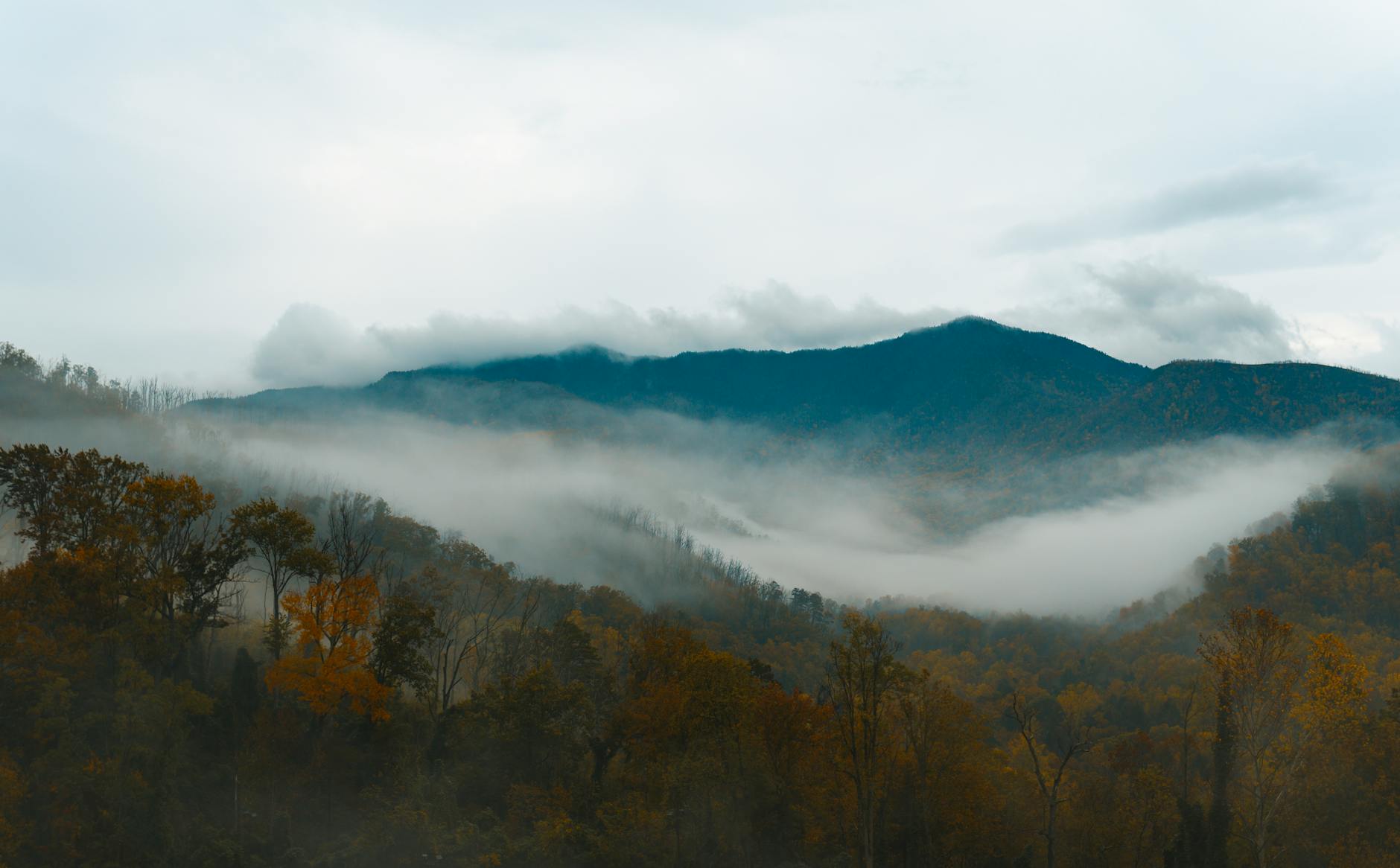
I grew up as a young queer boy in rural Appalachia, raised among ridgelines, hollers, and the quiet weight of expectation inside the Southern Missionary Baptist Church. From an early age, I learned what it meant to feel different, to be watched closely, and to navigate a world where parts of who I was were not welcomed or understood. Coming out openly as gay in that environment meant living at the intersection of deep attachment to home and profound marginalization and oppression.
Alongside this, I grew up in a home shaped by emotional and physical abuse. As a child, I did not yet have language for what my body was holding—only a constant awareness of tension, fear, and the need to stay alert. My nervous system learned to adapt early. Sensitivity, hypervigilance, and deep emotional awareness became ways of surviving a world that often felt unpredictable and unsafe.
What I did have was the mountains.
As a child, I often climbed the ridge near my home—scratched by briars, soaked by rain, moving through hollers and valleys that felt older than language. Up there, I felt closest to something greater—not as doctrine or dogma, but as presence. My spirit lived in those mountains, tucked away in land once held sacred by Indigenous people long before me. Even then, my body seemed to know what my mind could not yet name: that connection, safety, and meaning were possible.
I was the first in my family to attend college, eventually graduating from the University of Tennessee with a degree in public relations. I was drawn to storytelling, messaging, and the way communication shapes perception and power. But beneath that academic interest lived something deeper—a fascination with people, with lived experience, and with how we survive, adapt, and make meaning together.
In 2021, I began my own personal therapy. That work—slow, relational, and often uncomfortable—changed my life. Therapy became the space where I could begin to understand how early trauma shaped my body, relationships, and sense of self. It allowed me to gently deconstruct and reconstruct inherited beliefs around religion, gender, sexuality, and worth, while holding my Appalachian roots with care rather than shame.
My academic path followed that internal shift. I began graduate studies at St. Edward’s University and later transferred to the Seminary of the Southwest, seeking a counseling program that honored not only the mind, but the body and spirit as well. I was drawn to an integrative lens—one that makes room for complexity, contradiction, and lived experience, and that recognizes healing as relational, embodied, and deeply contextual.
Growing up, I rarely saw myself reflected in television, books, or film. Queer stories—especially rural, Southern, Appalachian ones—were nearly invisible. For a brief moment in recent years, it felt as though voices that once lived underground surfaced into broader cultural awareness. Today, many of those voices are again being pushed back into silence. Marginalization, oppression, and erasure are not abstract concepts to me—they are lived realities that continue to shape individuals, families, and communities in very real ways.
Now, as a Clinical Mental Health Counseling graduate student preparing for licensure, my work is rooted in the belief that healing is possible in the presence of connection, safety, and compassion. I am especially drawn to working with individuals navigating trauma, anxiety, identity exploration, religious deconstruction and reconstruction, and the lasting impact of early life experiences.
This journey—from the mountains to the therapy room—has taught me that healing does not mean abandoning where we come from. It means learning how to carry our stories differently. With curiosity. With care. And with the courage to listen when something within us asks to be seen, heard, and tended to.
 Khristofer Johnsen
Leave a comment